

Boosting SEO for AI Blog Posts with Structured Data
페이지 정보

본문
When creating blog content with artificial intelligence, one of the most powerful yet often overlooked steps is integrating schema markup. Schema markup is a type of semantic code that helps search engines understand the intent and structure of your content. While AI can generate engaging articles quickly, it doesn’t automatically include the on-page SEO components that improve visibility in search results. Adding schema markup manually or through automation ensures your Automatic AI Writer for WordPress-generated content doesn’t just look good—it drives more traffic.
Start by identifying the type of schema that best fits your content. For most blog posts, WebPage schema is the recommended format. It tells search engines that your page is a blog article, and provides fields for the headline, author, date published, and main content. If your post includes reviews, recipes, events, or FAQs, use the corresponding schema types like Review, Recipe, Event, or FAQPage. Many AI tools now offer plugins or integrations that can intelligently produce structured data based on the content structure, but it’s always wise to review the output for accuracy.
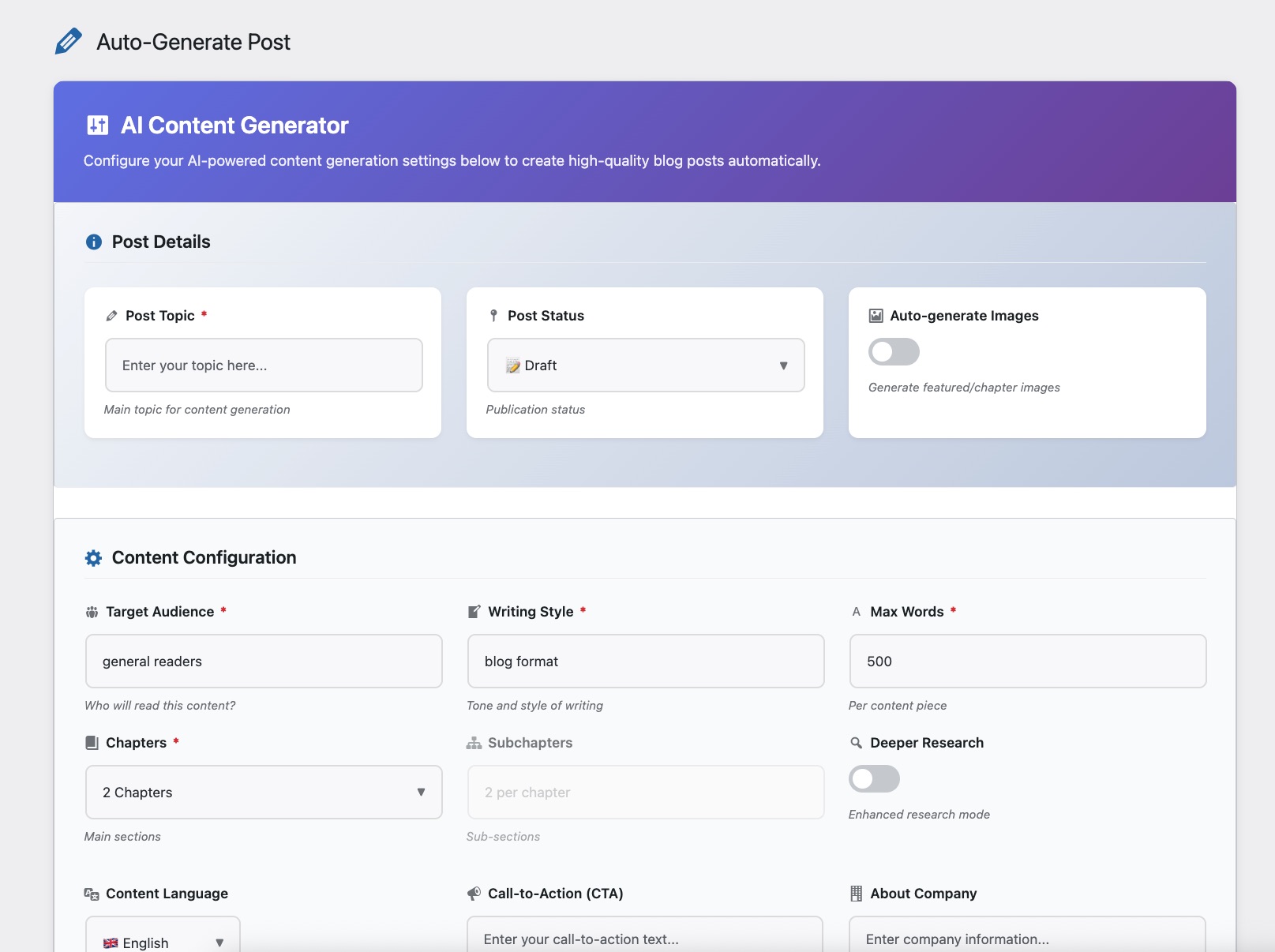
You can add schema markup directly to your website’s HTML using microdata, which is recommended by SEO experts. Place the structured data block in the head section of your blog post template. If you’re using a content management system like Shopify, plugins such as Rank Math or Yoast SEO can help you configure markup via UI. When using AI to generate your posts, make sure your workflow includes a step where schema is reviewed and applied. Some advanced AI writing platforms now allow you to select schema types during content generation, streamlining the process.
Don’t forget to test your schema after implementation. Use Google’s Rich Results Test to check for bugs. Common mistakes include invalid date formats. Even small errors can prevent your content from appearing in rich snippets, which can diminish visibility.
Integrating schema markup with AI-generated blog posts isn’t just about SEO—it’s about giving your content the best chance to be properly indexed and richly rendered. Search engines are getting smarter, but they still need unambiguous cues. By combining the speed and scalability of AI with the clarity of machine-readable format, you create content that not only engages audiences but also stands out in search results. The result is a smarter publishing workflow that delivers both performance and reach.
- 이전글Guide to Selecting Bed Cover Colors That Complement Flooring 26.02.26
- 다음글difference of opinion "What was best" vs "what was the best"? English Nomenclature Learners Push-down store Exchange 26.02.26
댓글목록
등록된 댓글이 없습니다.